
Ad creative pretest report example
Two ads earned the same score. Their simulated answers still pointed to a concrete edit. Here is how a delivery deadline got noticed without appearing in the audience’s description of the offer.
What we tested
On November 14, 2026, we ran two versions of a Korean meal delivery ad through AudienceAhead. This is an English translation of that QA run. The same 20 virtual profiles from the Korean audience reviewed the opening frames of both vertical TikTok in-feed videos.
Both versions used the same shot, banner position and color, audio, and footage after the opening. The variable was the on-screen line during the first three seconds: a question about planning dinner in A, and delivery before 7 a.m. in B.
What the report showed
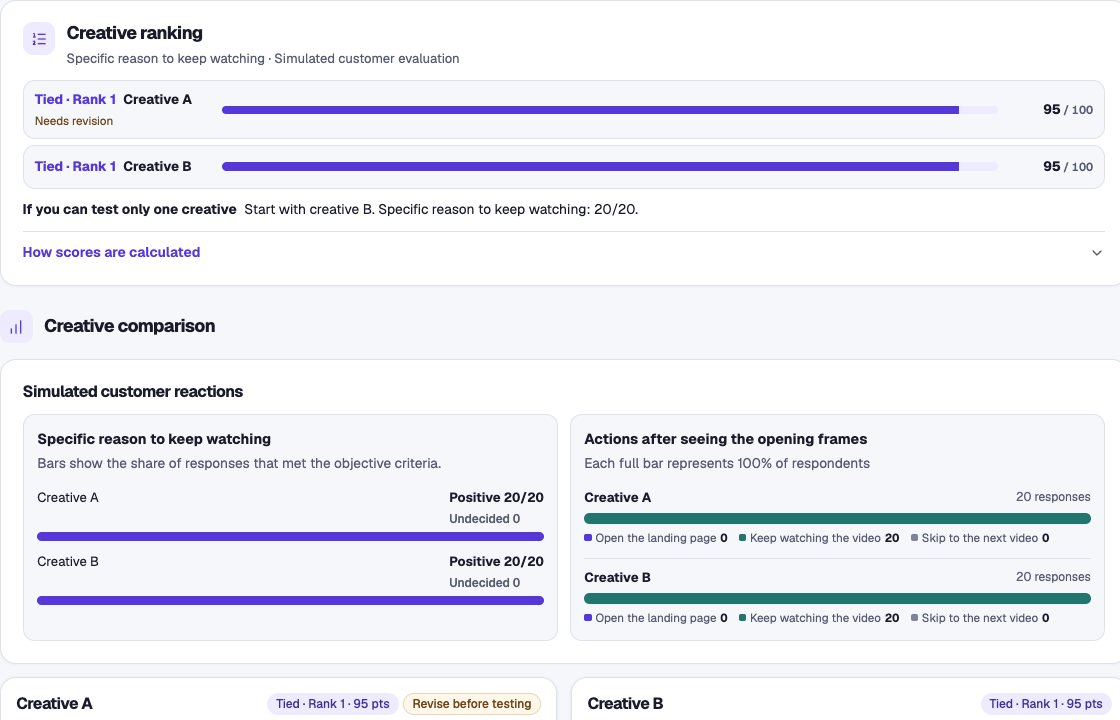
| Simulated result | A · Problem opening | B · Delivery opening |
|---|---|---|
| First on-screen line, translated | Wondering what to serve for dinner again? | Freshly made side dishes, at your door before 7 a.m. |
| Report score | 95/100 | 95/100 |
| Chose to keep watching the same video | 20/20 | 20/20 |
| Named “before 7 a.m.” when describing the offer | 0/20 | 0/20 |
For B, 14 of the 20 virtual profiles referred to “before 7 a.m.” in their first impression or reason for their next action. Each profile counted once even when it mentioned the line in both answers. The deadline appeared zero times in the offer descriptions. These are results from one AI simulation.
From the finding to an edit
Try a sentence that names the action as well as the deadline: “Get freshly made side dishes delivered to your door before 7 a.m.” Keep the delivery terms, footage, and text placement fixed for the next comparison. Record how often each version’s offer description includes the deadline. A human panel can answer the same comprehension question.
If the campaign objective is early viewing, use a live split test to measure an agreed viewing metric. For instance, calculate two-second video views per impression for each version with the same audience settings and delivery window. The revised line is a proposed edit and has no live campaign results in this case. TikTok video play metrics · TikTok split testing
Questions about pretest methods
When should I use a synthetic audience or a human panel?
A synthetic audience can help surface ambiguous wording and prioritize revisions. A human panel can show how recruited people explain the offer in their own words. Who you recruit and how you show the ads affect how broadly you can interpret the responses. Use a live test to measure viewing, clicks or purchases under campaign conditions. AAPOR online sample quality guide
How can I test TikTok ad hooks before spending?
Duplicate the same in-feed video and change one element of the opening: the first shot or the on-screen line. Keep the rest of the footage and the call to action fixed. Check what stands out and what offer a reviewer can explain from the opening frames. Then choose what to verify in TikTok Ads Manager. TikTok creative best practices
How should I compare AI ad testing tools?
Start with the evidence you need. A synthetic panel can return structured explanations of how it read each variant. A predictive attention tool can show which areas its model expects to attract attention. A human survey can provide recruited participants’ responses. A live experiment measures campaign behavior. Ask each provider which placements it supports, what the report records, and what evidence it has for the specific output you plan to use. Example of an attention pretest · Example of recruited creative feedback
The report in AudienceAhead
Compare your own ads
Use two ads in the same format to see how a virtual panel reads your offer.
Start a creative pretest